
European School Luxembourg Students Hold Candid Exchange with US Ambassador Stacey Feinberg
By Julia Dec
On Monday morning, April 27th, the European School Luxembourg 2 hosted something valuable in secondary education: a genuine political conversation between students who are interested in world politics, and a diplomat who shapes it.
Ambassador Stacey Feinberg, businesswoman, investor, Harvard lecturer, mother of four, and the United States Representative to Luxembourg, arrived at our school for a breakfast meeting followed by an extended Q&A session and a one-on-one interview with The Pupils’ Voice.
Ms. Catherine Dimmock, a teacher at the European School Luxembourg 2, helped enormously in organizing the event which was hosted by Cherif Sylla, president of the Pupils ‘ Committee and Julia Dec, Editor-in-chief of The Pupils’ Voice, with the full support of the school’s management.
The title we chose for the morning, “Happy Birthday, America! We Need to Talk.” was deliberate. This year, the United States turns 250, an anniversary worth marking and worth reflecting on seriously.
The Room
Students from S6 and S7 history, economics, political science, and geography courses attended the meeting; not as passive observers of current events, but the generation that will inherit whatever settlement, or lack of one, emerges from the crises currently unfolding. The atmosphere was respectful but remained purposeful.
Before questions began, the morning opened with introductory remarks that set the tone plainly: America’s founding ideals: equality, the rule of law, the separation of powers generationally crossed the Atlantic and helped build the international order that gave Europe its longest period of peace, and for that, genuine gratitude is owed. However, the speech also remarked that the country that built those institutions now seems to be walking away from them; the country that stood with Europe through the Cold War now regards its oldest allies with something between suspicion and indifference. These are not provocations. They are observations that most serious analysts share, and Ambassador Feinberg received them with composure.
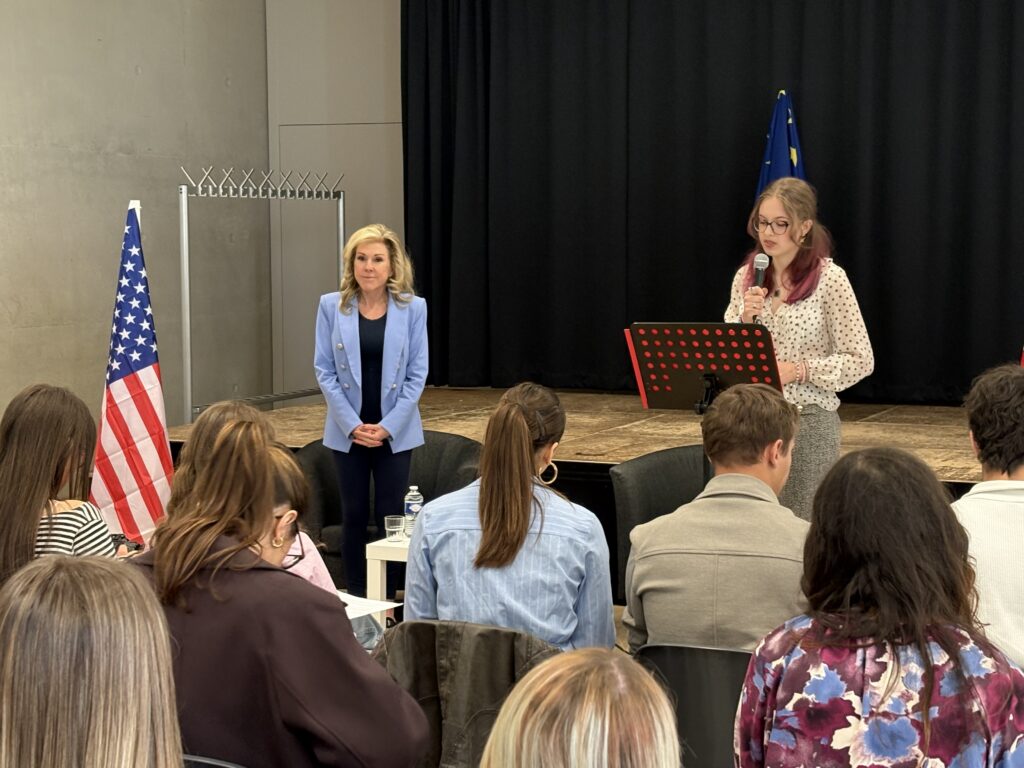
Ambassador Feinberg (left) listening to introductory remarks.
The Questions
Students came prepared. The questions ranged across four areas: Luxembourg-US bilateral relations, EU-US relations since 1945, international crises, and the Ambassador’s own career and advice for the next generation.
On Luxembourg’s relationship with Washington, students questioned how the Grand Duchy’s role in European finance and space technology shapes its leverage, and its vulnerabilities, in dealings with a superpower that has recently shown limited patience for the multilateral structures Luxembourg depends on.
The EU question was sharper: how does Washington navigate a supranational body of 27 member states, each with its own priorities, rather than a single partner? And what remains of the US commitment to NATO, not rhetorically, but practically, at a moment when European capitals are quietly accelerating their own defence spending precisely because they are no longer certain of the answer?
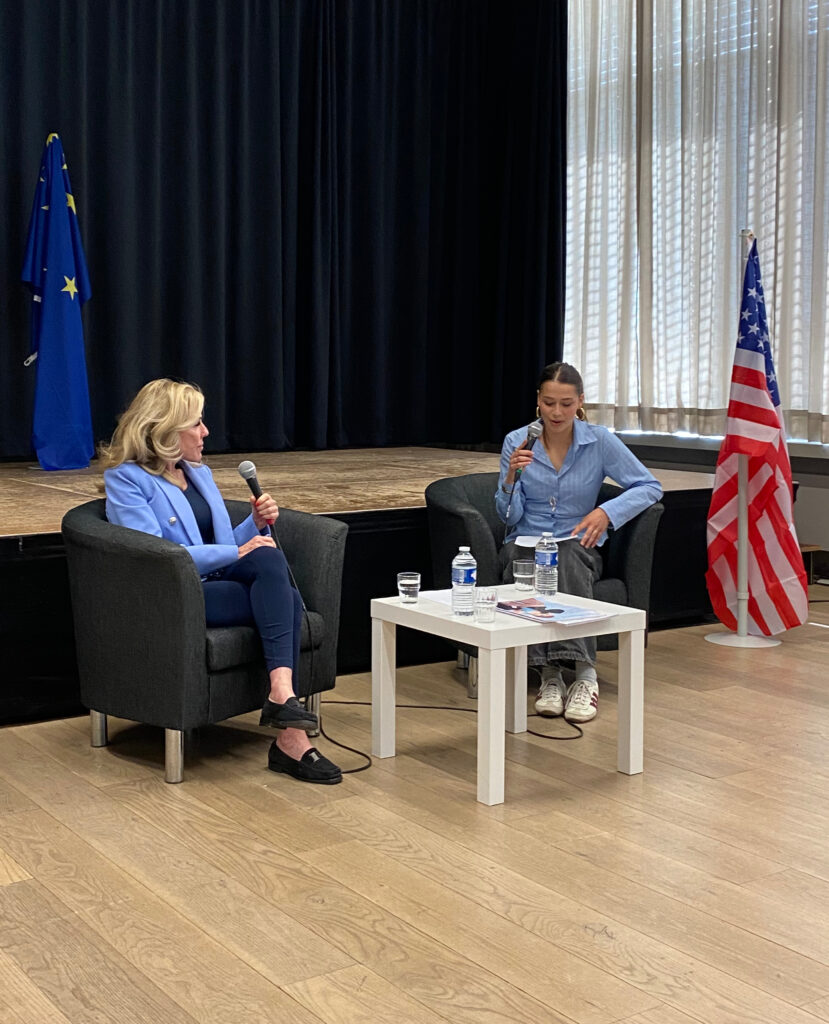
Ambassador Feinberg addressing questions posed by students.
One of the most striking exchanges came from an American-Danish student who asked directly about Greenland and the US administration’s openly stated desire to bring the island under American control: what it means for Denmark, for the EU, and for the concept of allied trust. It is a question that would have been unthinkable to ask a US Ambassador five years ago. The fact that it is now entirely reasonable to raise it says something significant about the moment we are in.
On the Middle East, students pressed on the trajectory of US-Israel-Iran relations following February’s airstrikes and the ongoing disruption to global energy markets. The Cuba embargo, still in place, its documented humanitarian effects long established, was another point of interrogation.
As expected, Ambassador Feinberg presented the official position of the current administration on each of these topics, clearly and without equivocation. What distinguished the exchange, however, was the effort she made to explain the reasoning behind those positions in some depth, rather than simply restating them. Students appreciated the effort, and that rendered the conversation richer. Whether it moved any of them closer to the administration’s point of view is a separate matter; on the whole, it is fair to say that it did not.
The Interview
The formal Q&A gave way to a thirty-minute interview with The Pupils’ Voice, covering subjects including the Paris Agreement, the regulation of social media, and a career-defining moment from Ambassador Feinberg’s own trajectory. The full transcript will be published alongside this article.
What emerged, across all of these exchanges, was a portrait of a diplomat who is personally thoughtful and professionally impressive: someone who built her career on the conviction that partnership and trust matter, that people who deserve a chance should get one. We take her at her word, as we said in the opening remarks. And precisely because we take her at her word, we think she understands better than most what is lost when that trust erodes between the United States and the democratic world it helped construct.
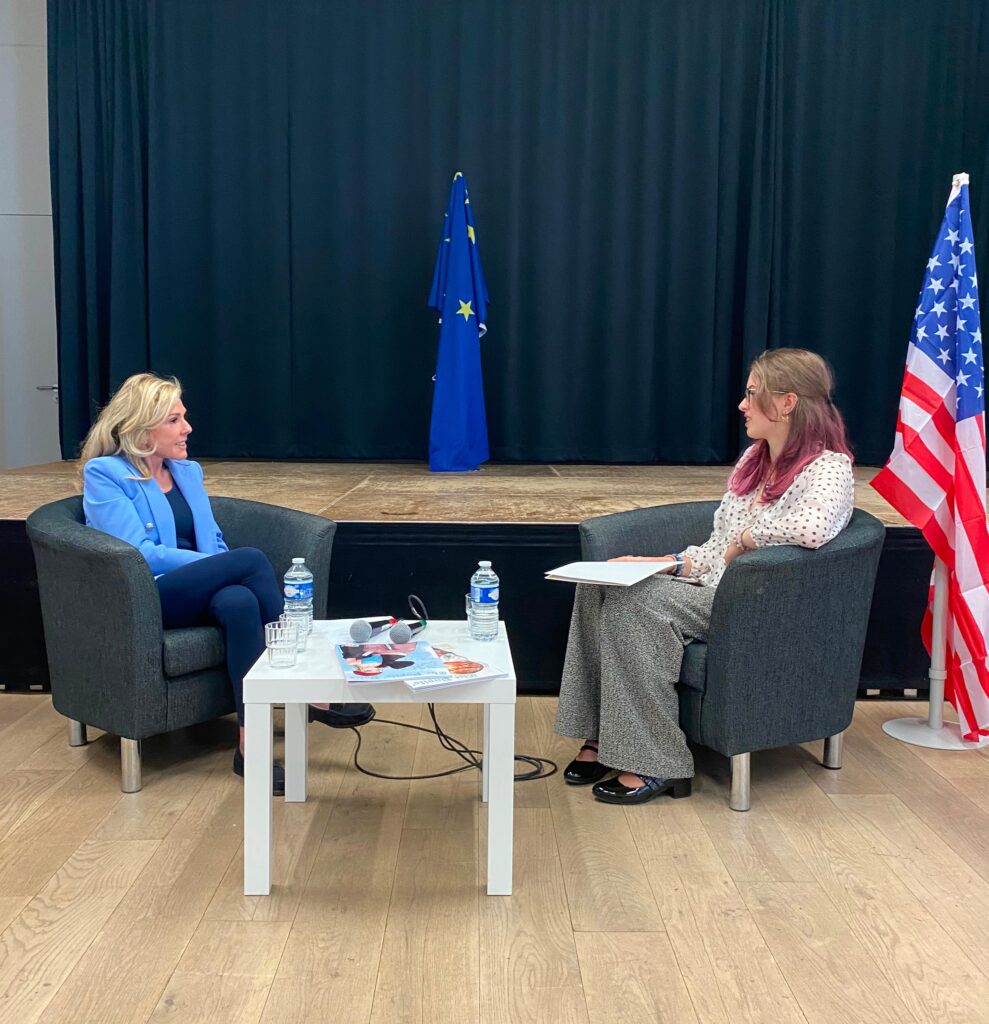
Ambassador Feinberg’s exclusive interview for The Pupils’ Voice.
What This Morning Was
It would be easy to frame an event like this as a feel-good exercise in civic engagement: students ask polite questions; diplomat gives polished answers; everyone goes home having learned that diplomacy is complicated. And that is precisely what did not transpire.
The questions were serious. The room was laden with students who read the news, who think carefully about what they read, and who are aware that the choices made in Washington, Brussels, and Moscow over the next decade will shape the world they will spend their adult lives in.
The conversation was honest rather than hostile or adversarial. And such a spirit of honesty, as the opening remarks noted, is precisely what the spirit of 1776 demands.
Ambassador Feinberg came to Luxembourg, she has said, because she wanted to work and to serve. On Monday, she did exactly that, as she showed a generation of European students that a frank conversation across the Atlantic is still possible, and in the current climate, that is not a small thing.
The United States is 250 years old. The ideals of its founding remain extraordinary, and the gap between those ideals and present American conduct, in international institutions, in the treatment of allies, in the politics of climate and trade, is a source of real grief for many of the students in that room, not hostility. We use the word “grief” because those ideals matter to us; we were raised in a world that promised to be better for them.
That is, ultimately, what “We Need to Talk” means: we hope the conversation continues.
The Pupils’ Voice thanks Ambassador Feinberg, Ms. Dimmock, Cherif Sylla, and the school management for making this event possible.
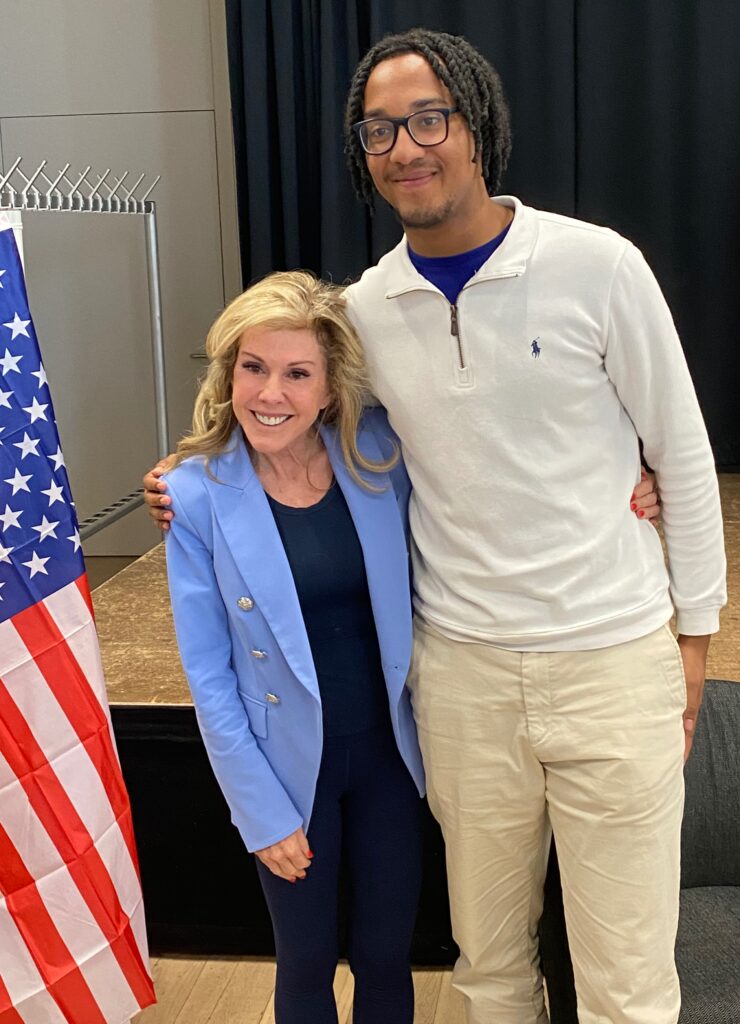
Ambassador Feinberg with Cherif, President of The Pupils’ Committee.
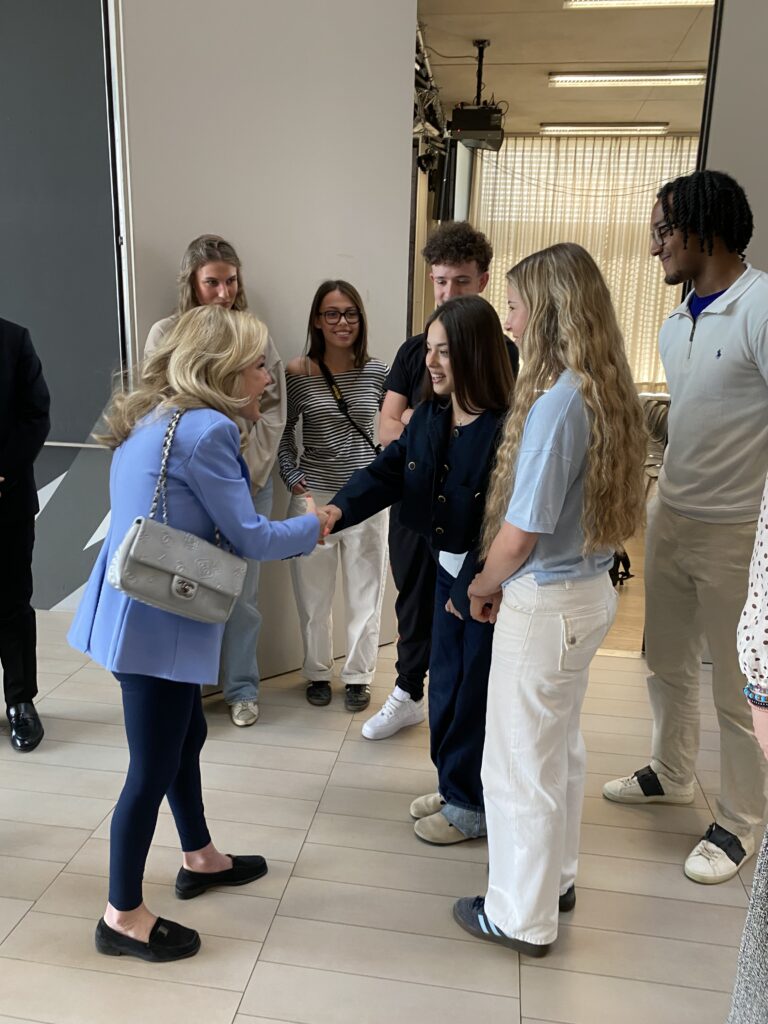
Saying goodbye.